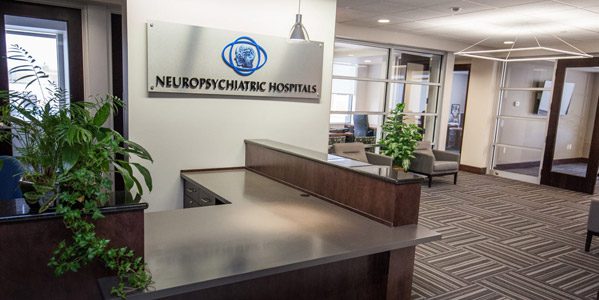
Every time a TV drama needs a setting that feels unsettling, the psychiatric ward shows up: fluorescent lights, padded walls, someone being dragged down a hallway. It’s a reliable shorthand for the genre. It’s also almost entirely wrong, and it shapes how people think about getting help long before they ever need it.
Here’s where the screen version and the real one part ways.
The building isn’t a horror set.
Film and TV lean on bare walls, flickering lights, and locked doors to signal danger. Real psychiatric hospitals are designed around safety, yes, but also around calm. Natural light where possible, soft colors, common spaces meant for connection rather than isolation. The physical environment is built to lower a person’s nervous system, not raise it.
Staff aren’t either cruel or incompetent.
TV tends to give psychiatric staff two settings: menacing or bumbling. In reality, the people working a psychiatric unit train extensively in de-escalation and trauma-informed communication, reading what’s underneath a behavior rather than just reacting to it. A patient who is yelling isn’t a plot device. They’re communicating fear, pain, or an unmet need, and staff are trained to hear that.
Patients aren’t a monolith.
Movies tend to show two types of patients: the dangerously unpredictable one and the person silently staring at a wall. Most people admitted to a psychiatric hospital are neither. They’re someone’s parent, coworker, or teenager, having the worst week of their life and needing a safe place to stabilize. The drama of the extremes makes for better television. It makes for worse public understanding.
Restraints aren’t routine.
Few images are more overused than a patient being strapped down mid-scene. In real psychiatric care, physical restraint and seclusion are treated as last resorts, heavily regulated and used only after other de-escalation approaches have been tried. A well-run unit measures itself partly by how rarely it needs to use them, not how dramatically.
There’s no instant cure, and no permanent sentence.
TV likes a tidy ending: either the patient is “fixed” in one breakthrough scene, or they’re locked away indefinitely. Real psychiatric treatment is a process: stabilization, individualized care planning, and a deliberate transition back to daily life with follow-up support. Most stays are measured in days, not seasons.
None of this is to say psychiatric hospitalization is simple, or without real difficulty for patients and families. It often is hard. But the gap between fiction and reality matters. When people only know psychiatric care from what they’ve seen on screen, they’re more likely to delay getting help for themselves or someone they love, and that delay has real costs.
If you or someone you know is struggling, the 988 Suicide and Crisis Lifeline is available 24/7 by call or text. Real help looks a lot more human than television gives it credit for.
What Psychiatric Care Looks Like at NeuroPsychiatric Hospitals
At NeuroPsychiatric Hospitals (NPH), short-term psychiatric hospitalization is focused on helping patients safely stabilize while addressing their individual psychiatric and medical needs. Care begins with an assessment to better understand each patient’s needs and develop an individualized treatment plan, with the care team monitoring progress throughout the stay and planning for the appropriate next level of care.
At NPH, we believe better understanding of psychiatric hospitalization can help patients and families approach care with greater clarity and confidence. If you or someone you know is struggling, the 988 Suicide & Crisis Lifeline is available 24/7 by call or text. Real help looks a lot more human than television gives it credit for.