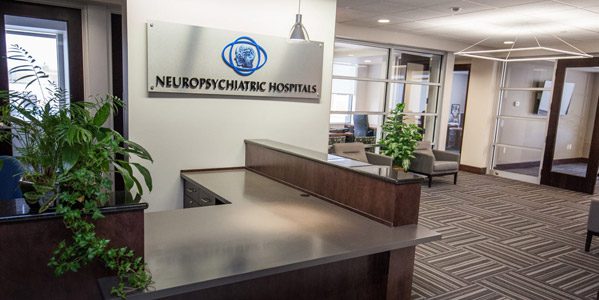
NeuroPsychiatric Hospitals, Patient Experience and Culture
Ask someone what makes a hospital stay feel safe, and they’ll usually mention a doctor or nurse. Ask a patient what they actually remember, and the answer is often someone else entirely: the person who walked them to their room, the aide who knocked before entering, the staff member at the front desk who explained what was happening next.
It isn’t a new idea. Brands known for extraordinary service learned this lesson decades ago. Apple doesn’t reserve customer training for its engineers; everyone on the floor is trained the same way. The Ritz-Carlton doesn’t train front desk staff differently from housekeeping. Both are expected to deliver on the same standard, because a guest’s experience is built from every person they encounter, not just the ones with a title.
In a hospital, especially a behavioral health hospital, that principle matters more, not less. A patient arriving in crisis isn’t evaluating credentials. They’re reading the room: Does this person look at me when they speak? Do they explain what’s happening before it happens? Do they treat me like a person, not a task on a list? Those questions get answered just as often by the person delivering a meal tray as by the treating physician.
There’s a concept from the world of service training that captures why this matters: what happens behind the scenes always shows up in front of the patient. If staff are short with each other in the hallway, dismissive during a handoff, or visibly frustrated where a patient can overhear it, that tension doesn’t stay contained. It reaches the patient, even when nothing was said or done to them directly. When every employee, regardless of role, is equipped to connect, listen, and respond with calm and respect, patients feel the consistency of that culture everywhere they turn.
This is why NeuroPsychiatric Hospitals (NPH) trains every employee in the same patient experience framework: administrative staff, support services, admissions, and clinical teams alike. Not because everyone does the same job, but because everyone shapes the same experience. A patient doesn’t experience a hospital department by department. They experience it as one continuous interaction, and it only takes one disconnected moment to undo several good ones.
The standard we hold ourselves to is simple: every interaction, every patient, every time. And “every” means every employee, not just the ones wearing scrubs.